
French Bulldog Exercise Needs by Age: What You Should Know
I remember watching a new Frenchie owner at the park one morning, jogging at a decent clip with her eight-month-old puppy running alongside her. She was proud of how well he was keeping up. I asked her how long they’d been doing this. “Every morning,” she said. “About forty minutes.”
She didn’t know yet. And she wasn’t trying to hurt him.
French Bulldog exercise is one of those topics where enthusiasm and affection can actually work against the dog if you don’t understand what you’re working with. Frenchies look sturdy. They play hard. They’ll push themselves to keep up with you even when they shouldn’t. That combination makes it easy to do too much without realizing it — and the consequences can show up months or even years later.
Here’s what you actually need to know about French Bulldog exercise at every stage of life.
Why French Bulldog Exercise Works Differently
Before we talk numbers, you need to understand what makes Frenchies different from most other breeds when it comes to activity.
French Bulldogs are brachycephalic — meaning they have a compressed skull structure that shortens the nasal passages and narrows the airway. That flat face is part of the breed’s character, but it also means they can’t breathe as efficiently as longer-muzzled dogs. They overheat faster, tire more quickly, and recover more slowly during and after physical activity.
According to the American Veterinary Medical Association, brachycephalic breeds require special consideration during exercise because of their compromised airway anatomy. Heat is the biggest risk — a Frenchie’s ability to cool itself through panting is limited compared to other breeds, which means overheating can escalate quickly.
This is the baseline for everything that follows. French Bulldog exercise isn’t just about how much — it’s about when, how, and at what intensity.
French Bulldog Exercise for Puppies: The 5-Minute Rule
This is the rule that the new owner at the park didn’t know about, and it’s the one that matters most.
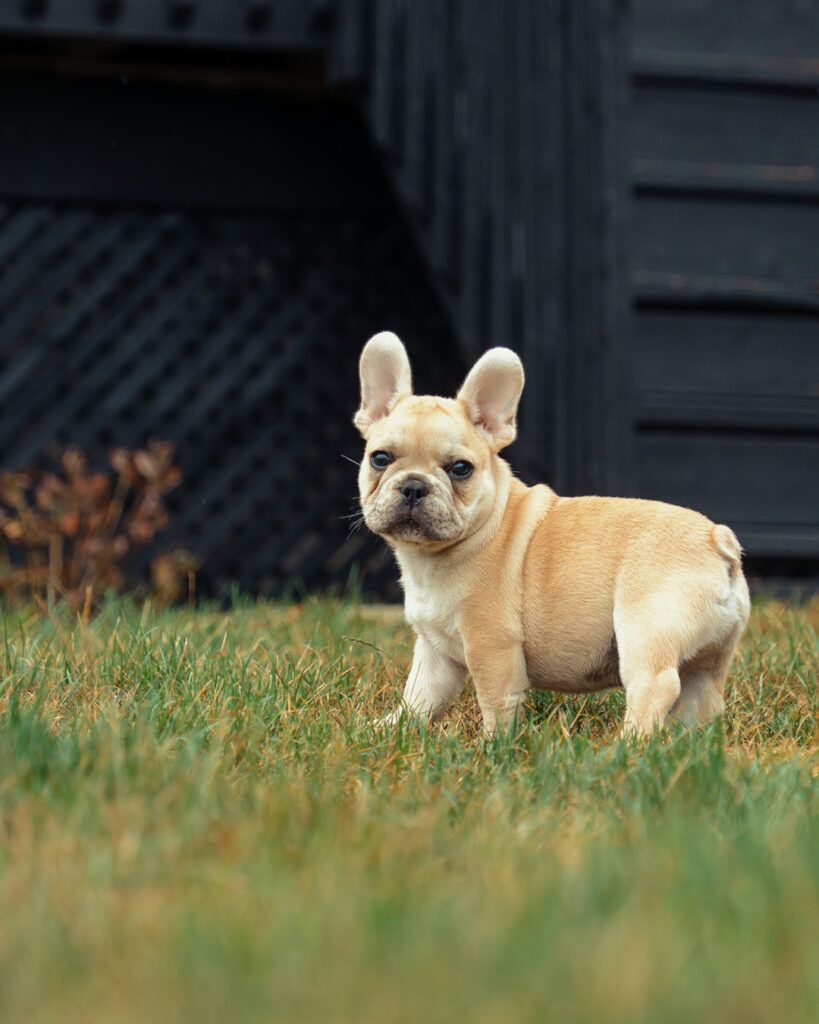
Puppies under twelve months should follow what’s commonly called the “five-minute rule”: five minutes of exercise per month of age, up to twice daily. That means a four-month-old Frenchie puppy needs a maximum of twenty minutes of exercise per session, twice a day. An eight-month-old needs forty minutes per session.
The reasoning isn’t about endurance. It’s about joint and bone development. A puppy’s growth plates are open until somewhere between nine and fourteen months of age. High-impact activity, repetitive strain, or excessive distance during this window can cause real damage to developing joints — damage that doesn’t always show up until adulthood.
For Frenchie puppies specifically, keep exercise:
- Short and gentle (slow walks, light play)
- On soft surfaces where possible (grass over pavement)
- In cool temperatures (early morning or evening)
- Free of jumping, stairs, or hard running
Our puppies at My Pawesome Frenchie are exposed to controlled socialization and gentle movement from their first weeks. By the time they go home, they already know the rhythm of calm activity. That foundation makes the transition to their new home easier and sets healthy physical habits early. You can read more about how we approach that in our process.
Adult French Bulldog Exercise: Finding the Right Routine
Once a Frenchie is past twelve to fourteen months and their growth plates have closed, you can ease into a more consistent adult exercise routine.
Adult French Bulldog exercise should total around 45 to 60 minutes of activity per day, broken into shorter sessions. A thirty-minute morning walk and a twenty-minute evening walk — with some playtime mixed in — covers most adult Frenchies well. Some will want a bit more, some a bit less. Pay attention to the individual dog.
A few rules that apply at every adult exercise session:
Avoid midday heat. During warm months, morning and evening are the only safe windows. Pavement stores heat and can burn paw pads. If the asphalt is too hot for your bare hand, it’s too hot for your Frenchie’s paws.
Watch the breathing. A moderate pant is normal. Labored breathing, excessive drooling, or a dog that’s struggling to catch their breath are signals to stop and rest immediately.
Keep it moderate. Frenchies aren’t built for sustained running or high-intensity activity. Leash walks, off-leash play in a secure yard, and short fetching sessions are ideal. Distance running, hiking over rough terrain, and swimming without supervision aren’t appropriate for most Frenchies.
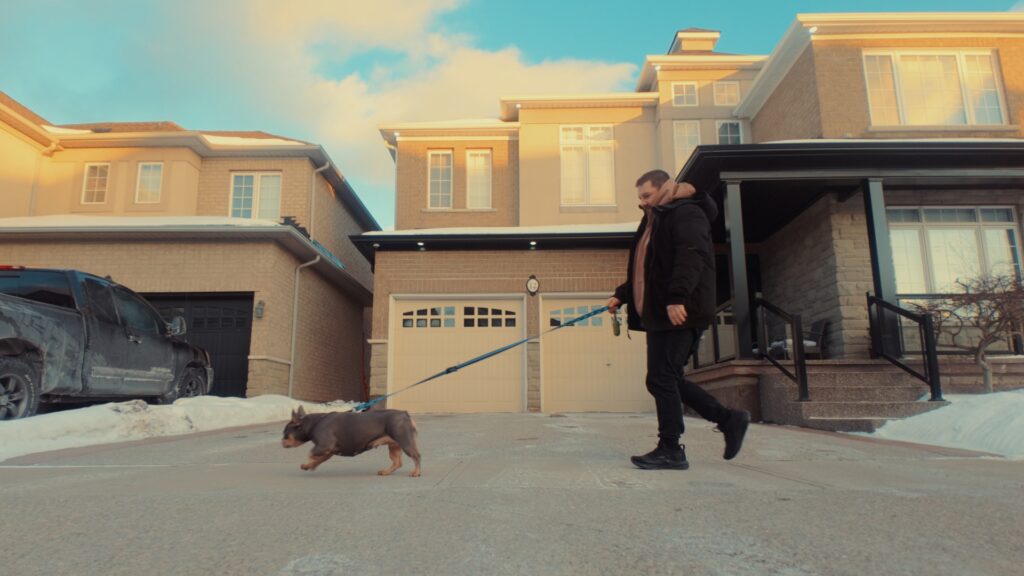
Füli has been part of my daily routine for years. He joins me on errands, goes for steady morning walks, and gets playtime in the yard. He doesn’t need a lot — he needs the right kind. That difference is what keeps him healthy and active well into his adult years.
Senior Frenchie Exercise: Slowing Down the Right Way
Around age seven, Frenchies enter their senior years. Their exercise needs don’t disappear — they shift.
Senior French Bulldog exercise should continue daily, but with shorter duration and reduced intensity. Many senior Frenchies do well with two or three gentle fifteen-to-twenty-minute walks per day, with ample rest in between. What you’re looking for is continued movement to support joint health and healthy body weight — without pushing a system that doesn’t recover as quickly as it once did.
Watch for signs that a session was too much: heavy panting that doesn’t resolve within ten minutes of rest, limping or stiffness after a walk, reluctance to move the following morning. These are signals to cut duration or switch to even shorter, more frequent outings.
Senior dogs on a quality diet tend to manage activity better. This is another area where raw feeding makes a difference — the anti-inflammatory properties of a high-quality raw diet with proper omega-3 intake support joint health over time in ways that conventional kibble often doesn’t. You can read about our approach to nutrition and how we start every puppy on raw at MPF.
Warning Signs to Watch During French Bulldog Exercise
Regardless of age, there are signs that French Bulldog exercise has gone too far, too fast, or in the wrong conditions.
Stop immediately and move to a cool, shaded area if you notice any of the following:
- Rapid, labored breathing that isn’t slowing down
- Excessive drooling or foamy saliva
- Bright red gums or tongue
- Weakness, stumbling, or disorientation
- Refusing to continue walking
These can be early signs of heatstroke, which is a genuine emergency in brachycephalic breeds. Get the dog to a cool space, offer small amounts of water, and contact your vet immediately if symptoms don’t resolve within a few minutes of rest.
Prevention is easier than treatment. Keep French Bulldog exercise in cooler parts of the day, avoid pushing through signs of fatigue, and always carry water on walks longer than fifteen minutes.
Mental Exercise for Frenchies: The Part Most Owners Skip
Physical activity is only part of the picture. French Bulldog exercise that only addresses the body is missing something.
Frenchies are intelligent dogs. Füli has always been a thinker — he watches, he reads situations, and he gets bored when his mind isn’t engaged. That boredom shows up as restlessness, destructive chewing, or attention-seeking behavior. A mentally stimulated Frenchie is usually a calmer, better-behaved dog than one who just gets walked.
Short training sessions, puzzle feeders, sniff walks where the dog leads and sets the pace, and rotating toys all count as mental exercise. Five to ten minutes of basic obedience or nose work in the evening can do more for a Frenchie’s overall balance than an extra twenty minutes of pavement pounding.
This is part of what we prepare new families for before a puppy goes home. Our puppies already have a head start on basic training and mental engagement from the first weeks. That foundation gives new owners a real advantage in building healthy habits from day one.
Getting the Balance Right
French Bulldog exercise isn’t complicated once you understand the framework: short sessions, moderate intensity, temperature-conscious timing, and consistent mental engagement across every life stage.
The owners who get it right aren’t doing more — they’re doing it smarter. They know that thirty minutes in cool morning air beats forty-five minutes at midday. They know that a twenty-minute sniff walk engages a Frenchie’s brain more than a quick jog. And they know that the five-minute rule in puppyhood isn’t overprotective — it’s an investment in a healthy adult dog.
If you’re preparing to bring a Frenchie home and want to understand exactly what daily care looks like, we walk every family through that before anything moves forward.
If you’re ready to meet one of our upcoming French Bulldog puppies or join our waitlist, visit the website and fill out the intake form to get all the details. www.mypawesomefrenchie.com/contact